Sensory perseverance, often referred to as “sensory seeking” or “stimming,” is the brain’s way of seeking specific input to reach a state of equilibrium. From a neurological perspective, it often indicates a high threshold in the vestibular (movement) or proprioceptive (pressure) systems. Instead of “stopping” the behavior, our therapy seeks to understand the sensory need behind it and provide more efficient, socially appropriate ways to meet that need.
In the bustling urban environment of Dubai, children are bombarded with high-intensity sensory data. A child who “perseverates” by spinning or repetitive tapping is often trying to block out the overwhelming noise of a Sharjah mall or the bright lights of a classroom. Our clinical approach focuses on sensory diet integration, giving the child’s nervous system the “nutrients” it needs so it doesn’t have to seek them out in disruptive ways.
The “Deep Pressure” Calm-Down
Before heading out to a busy area like Sahara Centre, provide your child with “joint compressions” or a firm hug. This proprioceptive input acts as a natural sedative for the nervous system, reducing the need for sensory perseveration while you are out.
Specialist FAQ
- Should I stop my child from stimming? We focus on “functional replacement.” If the behavior is harmful or stops them from learning, we find a safer way to get that same sensory feeling.
- Is this just a phase? For neurodivergent children, sensory needs are often lifelong, but the way they manage them becomes much more sophisticated with therapy.
- Can diet affect sensory seeking? While not the cause, some parents in Dubai find that reducing sugar and additives can lower the overall “internal noise” for their child.
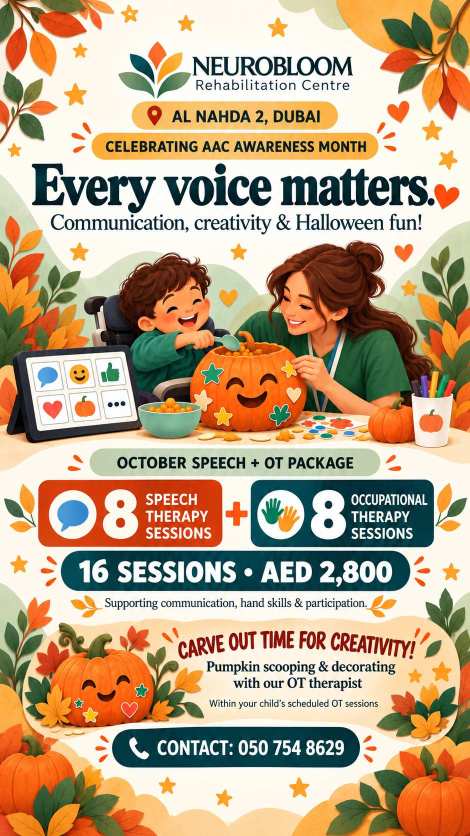
Understand the “why” behind your child’s sensory habits. Contact Neurobloom Rehabilitation Centre, Al Nahda 2, Dubai at 0507548629 for a comprehensive sensory processing evaluation.