A child may be curious and eager to learn but still find certain classroom routines difficult. They might need extra reminders to follow instructions, find it hard to move from playtime to group activities, hesitate to communicate with classmates or rely on adult help for everyday tasks. These situations can leave parents and educators wondering how best to prepare the child for classroom participation.
Classroom readiness is not simply about knowing letters, numbers or colours. It also involves developing the everyday skills that help a child take part in learning, communicate needs, manage transitions and interact with others. For families and educators in Naif, Dubai, understanding these skills can help make the move into nursery or school more manageable.
What Does Classroom Readiness Mean?
Classroom readiness describes a child’s developing ability to participate in activities and routines commonly found in an educational setting. The skills involved vary with age, developmental stage and the expectations of the particular classroom.
A child may be ready in some areas and need more support in others. For example, they may enjoy books and puzzles but find group instructions challenging. Another child may communicate confidently with adults but need time to become comfortable playing alongside other children.
Classroom readiness can include:
- Communication: Expressing needs, asking for help and understanding familiar instructions.
- Attention and engagement: Participating in short, age-appropriate activities and returning to tasks with suitable support.
- Social participation: Taking turns, playing alongside peers and responding to others.
- Following routines: Understanding what happens during arrival, group time, play, meals and transitions.
- Everyday independence: Managing simple tasks such as putting belongings away or participating in age-appropriate self-care.
- Emotional adjustment: Becoming familiar with new environments and learning ways to seek help when situations feel difficult.
These are skills that develop over time. Readiness does not require a child to perform every task independently or behave perfectly throughout the school day.
Common Classroom Situations That May Need Support
Looking at specific classroom situations can help parents and educators identify useful next steps.
Following group instructions
During circle time or a group activity, the teacher may ask children to sit down, look at a picture or collect materials. A child who has difficulty understanding longer instructions may not know what to do next.
Adults can try using short instructions, gestures and demonstrations. Giving the child a moment to process the information can also help.
Moving between activities
Some children find it difficult to stop a preferred activity when it is time to tidy up, join a lesson or leave the playground.
A predictable transition routine may help. For example, the teacher can provide a brief warning, show what comes next and use consistent language when the activity changes.
Participating with classmates
A child may want to join other children but be unsure how to enter a game, share materials or take turns. Others may prefer to observe before participating.
Educators can introduce simple activities with clear roles, model turn-taking and allow children to participate at a comfortable pace. Social interaction should be encouraged without forcing a child into situations that cause significant distress.
Asking for help
Children may become frustrated when they cannot open a container, find a resource or understand an instruction. Some may not yet know how to communicate that they need assistance.
Adults can model simple phrases, gestures or other communication methods that the child can use. Recognising attempts to ask for help can gradually make classroom participation easier.
Managing belongings and daily tasks
Putting a bag away, finding a water bottle or preparing materials for an activity involves several small steps. A child may need support remembering the sequence.
A labelled storage space, picture reminder or repeated routine can help the child understand what to do. Assistance can be reduced gradually as the child becomes more familiar with the task.
Practical Ways to Build Classroom Readiness at Home
Parents do not need to recreate a classroom at home. Ordinary family activities can provide opportunities to practise many of the skills children use in educational settings.
1. Practise short activity sequences
Choose a familiar activity, such as preparing to go outside. Help the child follow a simple sequence: collect shoes, put them on and pick up a bag.
Use words, gestures or visual reminders according to what the child understands. Start with a manageable number of steps and add more only when appropriate.
2. Encourage communication during everyday routines
Give your child opportunities to make choices, request objects and share information. For example, ask which book they would like to read or encourage them to indicate when they need help.
Allow time for a response. Communication may involve spoken language, gestures, pictures or another method suited to the child’s needs.
3. Introduce simple turn-taking games
Board games suited to the child’s age, rolling a ball or taking turns adding blocks to a tower can create opportunities to practise waiting and responding.
Keep the activity enjoyable. If waiting is difficult, use shorter turns or offer a clear visual cue to show whose turn it is.
4. Build independence through small responsibilities
Invite the child to put toys in a container, carry a suitable item to the table or place their belongings in a familiar spot.
Demonstrate the task first and provide help when needed. The goal is to build participation and confidence, not to expect independent performance before the child is ready.
5. Make transitions predictable
Use consistent phrases such as, “First we finish the puzzle, then we have a snack.” A simple picture sequence may help some children understand the order of activities.
Practise the same approach during ordinary routines and observe whether it helps. If a strategy does not suit the child, adjust it rather than assuming the child is unwilling to cooperate.
How Nurseries and Schools Can Help
Classroom readiness develops through the interaction between the child, the learning environment and the support available. Educators can make participation easier by presenting information clearly and establishing predictable routines.
Useful classroom strategies may include:
- Giving one or two clear instructions at a time.
- Demonstrating a new task before expecting the child to complete it.
- Using visual schedules or reminders when helpful.
- Allowing enough time for the child to respond.
- Breaking longer activities into smaller steps.
- Offering opportunities for movement and age-appropriate play.
- Recognising attempts to participate rather than focusing only on completed tasks.
Educators can also observe when a child participates most comfortably. A child may manage a task well in a small group but need additional support during a busy whole-class activity. These observations can help adults identify adjustments that are practical within the classroom.
When Additional Classroom Readiness Support May Be Helpful
Some children need time to adjust to a new environment, and occasional difficulty is a normal part of learning. However, if challenges persist across routines or significantly affect participation, parents and educators may benefit from discussing the concerns with an appropriate professional.
It can help to record specific examples rather than relying on broad descriptions. For instance, note whether the child has difficulty following instructions in different settings, communicating basic needs, joining play or completing familiar tasks.
A child development assessment may help clarify the child’s strengths and support needs when concerns warrant further evaluation. Depending on the findings, recommendations may involve changes to everyday routines, collaboration with educators or a suitable form of professional support.
A speech and language professional may be relevant when communication is a concern. Occupational therapy may be considered when functional participation, self-care or related everyday skills need attention. The appropriate option depends on the child’s individual needs; not every child who struggles with classroom routines requires therapy.
Classroom Readiness Support in Naif, Dubai
For families in Naif, beginning with the child’s actual classroom experiences can make the search for support more focused. Parents may wish to speak with the nursery or school about which routines are difficult, what strategies have already been tried and which skills would make the greatest difference to the child’s participation.
When exploring a child development or rehabilitation service, ask how the provider identifies support needs, involves parents and connects recommendations to daily life. It is also useful to understand how goals will be reviewed and whether coordination with educators is possible when appropriate and with the necessary permissions.
The location of a service should be verified directly. Families should confirm the provider’s address, relevant professional qualifications, service availability, session format and fees rather than assuming that a service mentioned in relation to Naif is located within the neighbourhood.
Working Towards a Confident Start
Classroom readiness is best approached as a collection of developing skills, not a pass-or-fail test. Children can build participation through repeated experiences, clear expectations and support that reflects their individual abilities.
Parents and educators can work together to identify practical priorities, such as following a familiar routine, communicating a need, joining a short group activity or managing one daily task more independently. Progress should be reviewed over time, with strategies adjusted when they are not helping.
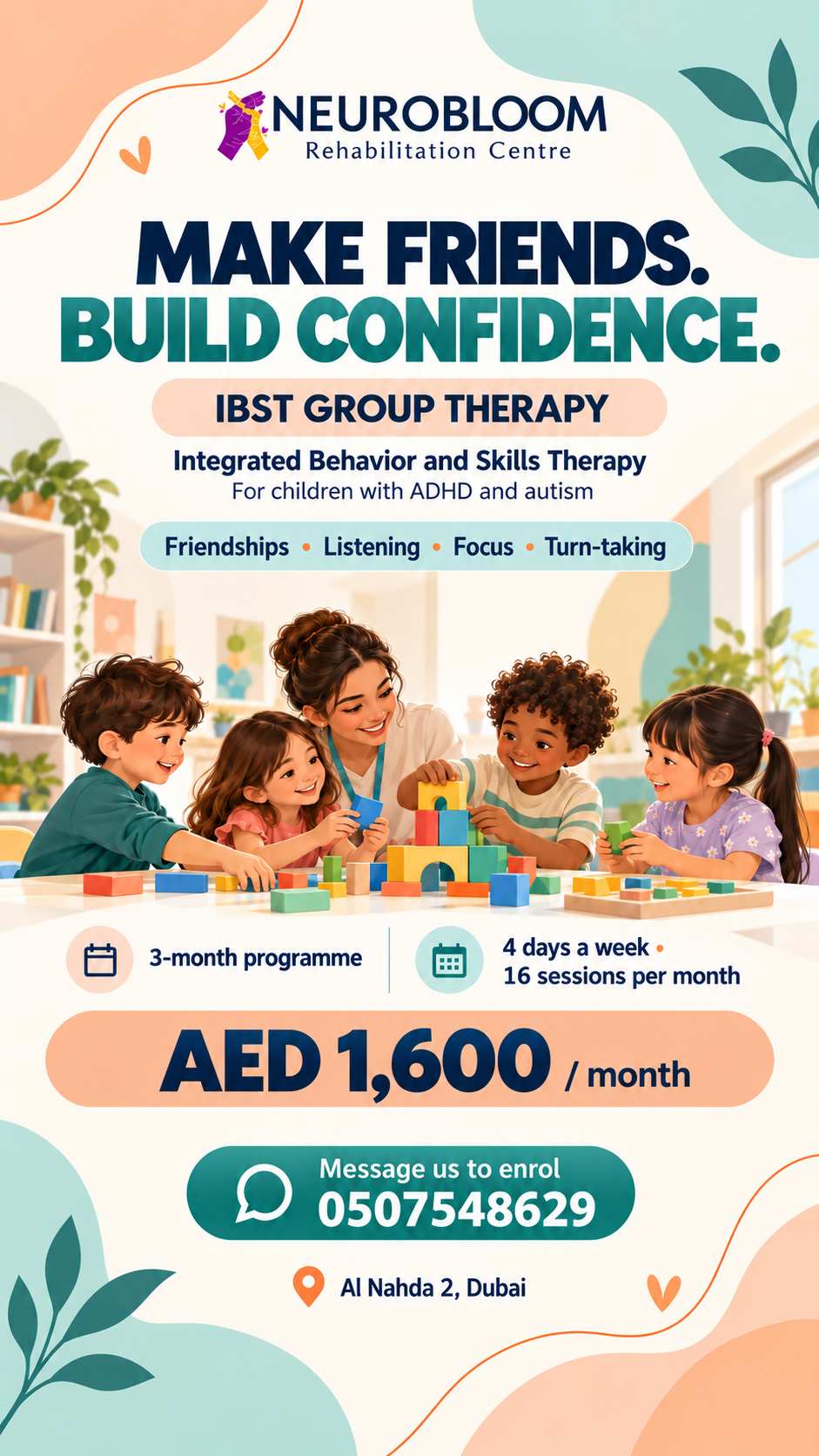
Neurobloom Rehabilitation Centre offers child-focused services including speech therapy, occupational therapy, early intervention, behaviour therapy and child development assessments. Families exploring support for classroom participation can review the centre’s services and discuss which options may be appropriate for their child’s individual needs.
With realistic goals and consistent, responsive support, families and educators can help children build the skills they need to participate more comfortably in nursery and school life.