Sequencing is the ability to perceive and organize events in a logical order. From a neurological standpoint, this is a function of the left hemisphere and the prefrontal cortex. It is the “internal timeline” that tells a child that “socks come before shoes” or that “a story has a beginning, middle, and end.” In the structured world of UAE education, poor sequencing can lead to “messy” writing, disorganized lockers, and an inability to follow multi-step science projects.
Therapy for sequencing involves “cognitive mapping.” We help the child’s brain visualize the steps of a task before they begin. For a child in Sharjah or Dubai, this could mean better performance in sports (sequencing movements), better storytelling (sequencing ideas), and more independence in “morning routines” (sequencing self-care).
The “Visual Timeline” Hack
Create a 3-step “Photo Schedule” for your child’s favorite activity, like going to the Al Nahda 2 park. Photo 1: Putting on shoes. Photo 2: Getting the water bottle. Photo 3: Stepping out the door. Have them “read” the photos before you start. This externalizes the “internal timeline” their brain is struggling to build, reducing “sequencing anxiety.”
Specialist FAQ
- How does poor sequencing affect my child’s speech?
It often leads to “jumbled” stories where the child starts in the middle or leaves out key details, making it hard for friends in Dubai to understand them.
- Is sequencing related to Dyslexia or ADHD?
Yes, it is a common “co-morbidity.” Many children with ADHD struggle with the “temporal processing” (time-sense) required for sequencing.
- At what age should a child be able to sequence a 3-part story?
By age 4, most children can tell you what happened first, next, and last in a simple story or daily event.
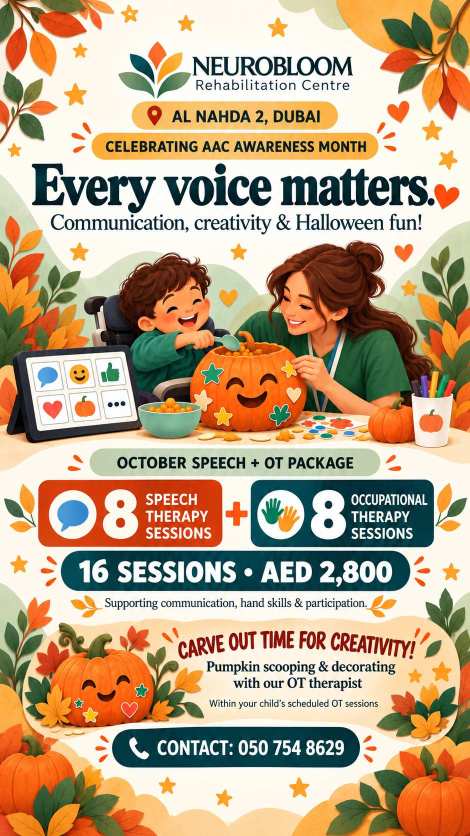
Help your child find the “logic in the chaos” and improve their daily organization. Call 0507548629 or visit Neurobloom Rehabilitation Centre, Al Nahda 2, Dubai to explore our sequencing and executive function programs.