Speech therapy for autism goes beyond just “teaching words”; it focuses on functional communication and pragmatics. Many children on the spectrum may be “verbal” (able to say words) but struggle with the social use of language—knowing how to start a conversation, take turns, or stay on topic. We work on the neurological synchronization required for articulation precision and the cognitive flexibility needed to understand metaphors or sarcasm, which are often literal hurdles for autistic minds.
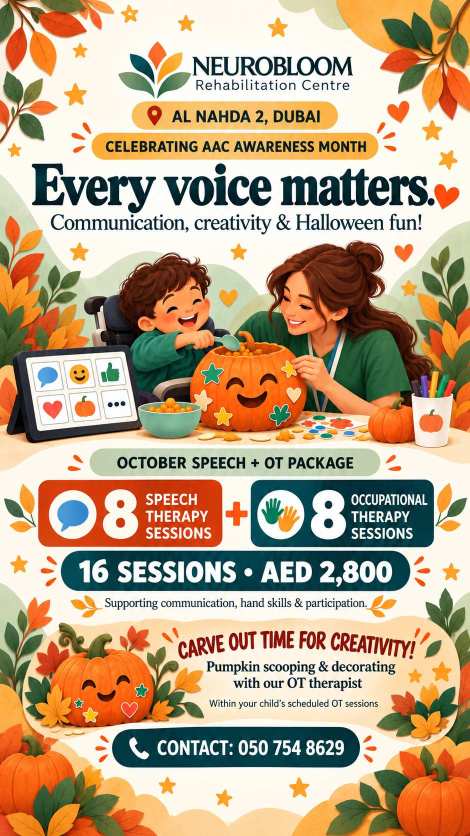
Clinically, we often incorporate Augmentative and Alternative Communication (AAC) systems if a child is non-speaking or minimally verbal. This isn’t a “crutch”; rather, it reduces the cortisol-spiking frustration of being misunderstood. By providing a reliable way to communicate, we actually stimulate the brain’s language centers, often leading to increased vocal attempts over time as the child begins to understand the “power” of their message.
Using “Visual Schedules” for Daily Dubai Routines
Autistic children often thrive on predictability. Create a simple visual schedule for your weekend—use photos of the car, the grocery store (like West Zone in Al Nahda), and home. Before you leave, point to the pictures. This reduces the “cognitive load” of transitions, allowing your child to use their mental energy for speech and interaction rather than worrying about what happens next.
Specialist FAQ
- If we use pictures, will they ever talk? Research shows AAC actually promotes verbal speech by reducing the stress associated with communication.
- What is ‘Echolalia’ and should I stop it? Echolalia (repeating words) is often a functional way for autistic children to process language; we use it as a bridge to more flexible speech.
- How many hours a week do we need? This depends on the individual, but consistency is more important than total hours.
Unlock your child’s voice with specialized autism speech therapy. Visit Neurobloom Rehabilitation Centre, Al Nahda 2, Dubai, or call 0507548629 to meet our clinical team.