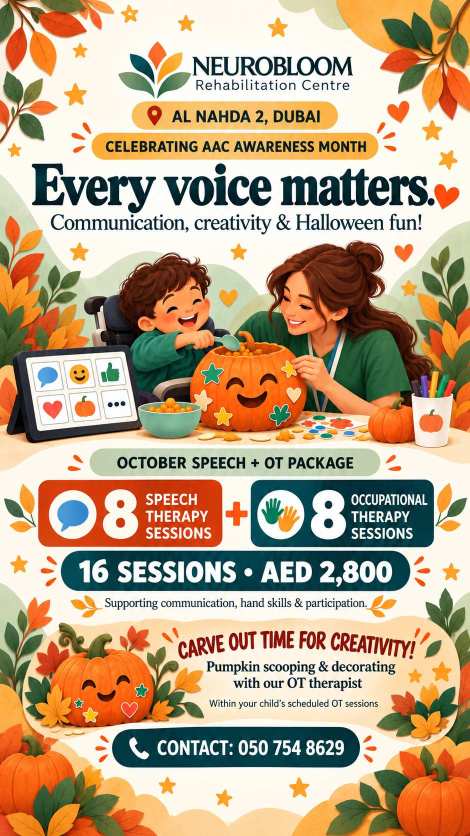
When a child receives an Autism Spectrum Disorder (ASD) diagnosis, or when parents begin noticing the early structural signs of neurodivergence, the emotional landscape of the household changes overnight. Simple, everyday routines that other families take for granted—such as a visit to a local park, a haircut, or a family dinner—can unexpectedly spiral into intense sensory meltdowns or periods of profound withdrawal. For households navigating these complex challenges along the northern border, finding reliable Autism Support Help for Families near Al Ittihad Road Al Mamzar is not just about finding a medical provider; it is about establishing a lifeline of clinical clarity, empathy, and practical guidance that transforms daily family life from a state of constant survival into a journey of shared progress.
At Neurobloom Rehabilitation Center, we recognize that autism does not just affect the child—it encompasses the entire family ecosystem. Behavioral rigidities, social communication bottlenecks, and sensory processing variances can leave parents feeling deeply isolated, exhausted, and overwhelmed by conflicting advice. By anchoring our specialized pediatric services at the direct nexus of the Dubai-Sharjah corridor, we provide families with highly accessible, evidence-based interventions. Our goal is to dismantle the logistical and emotional friction that so often hinders consistent care, allowing your child to develop meaningful independence right within their home community.
Shifting Focus: From Parental Exhaustion to Clinical Clarity
The daily reality of raising a neurodivergent child can quickly lead to chronic parental fatigue. When a child struggles to express their physical needs, reacts with intense distress to ordinary sounds, or rejects social engagement, it is easy for parents to internalize these moments as personal failures or behavioral defiance. From a neurological standpoint, however, these behaviors are functional adaptations to an environment that feels chaotic or overwhelming to their central nervous system. At Neurobloom Rehabilitation Center, our clinical team works to decode these actions, shifting the family dynamic away from reactive crisis management and toward proactive, skill-based development.
Our multidisciplinary approach combines Applied Behavior Analysis (ABA), speech-language pathology, and sensory-focused occupational therapy into a unified therapeutic framework. Rather than forcing rigid compliance, our evidence-based protocols focus on expanding your child’s functional communication, enhancing emotional self-regulation, and building adaptive daily living skills. By helping parents understand the neurophysiological “why” behind their child’s unique behavioral profile, we restore predictability and peace to the household, giving you the practical tools needed to confidently scaffold your child’s growth.
Why Families Choose Neurobloom
Our center stands as a premier destination for pediatric neurorehabilitation because we fundamentally reject the generic, one-size-fits-all clinical models that treat every child as an identical checklist. We understand that your child is an individual with distinct strengths, preferences, and an innate potential that deserves to be nurtured. Every family who joins Neurobloom Rehabilitation Center benefits from a deeply collaborative partnership, where parents are fully integrated into the therapeutic process rather than being left in the waiting room.
Our modern facility is thoughtfully engineered to be a low-stimulus, welcoming environment that maximizes clinical engagement while completely preventing sensory fatigue or distress. Our team consists of highly qualified, licensed practitioners—including Board Certified Behavior Analysts (BCBAs), speech therapists, and pediatric occupational therapists—who bring years of specialized experience to each session. We maintain rigorous standards of objective data collection and progress tracking, providing families with transparent, measurable proof of their child’s cognitive, linguistic, and behavioral milestones over time.
Understanding the Challenge: Core Processing and Behavioral Signs
Autism Spectrum Disorder manifests uniquely in every individual, but there are core structural variances in communication, social interaction, and sensory modulation that frequently disrupt a child’s daily functioning. Identifying these behavioral markers early allows parents to seek professional Autism Support Help for Families near Al Ittihad Road Al Mamzar before these challenges begin to severely isolate the child or compromise their future school readiness.
- Social Communication Barriers: A total lack of functional speech, pronounced expressive delays, minimal or inconsistent eye contact, or an inability to use non-verbal gestures like pointing to express an immediate need.
- Sensory Modulation Variances: Extreme hyper-reactivity (or hypo-reactivity) to everyday sensory inputs, such as panicking at the sound of a vacuum cleaner, refusing specific food textures, or conversely, constantly seeking intense physical input, rocking, or spinning.
- Rigid Behavioral Patterns: Becoming intensely distressed by minor disruptions in daily household routines, displaying a strict adherence to unvarying schedules, or showing an attachment to unusual objects or repetitive play habits (like lining up toys meticulously instead of functional play).
- Executive Functioning Obstacles: Pronounced difficulty transitioning between activities, low frustration tolerance, an inability to follow simple multi-step verbal directions, and a struggle to sustain attention on structured tasks.
- Deficits in Joint Attention: Showing little interest in sharing experiences or play with parents and peers, failing to look at objects when pointed out, or preferring prolonged, isolated solitary activities.
The Path to Progress: Building Lifelong Autonomy
The primary objective of our comprehensive autism support programs is to guide your child toward functional independence and authentic self-confidence. When your child begins their targeted therapeutic pathway at Neurobloom Rehabilitation Center, our team maps out a progressive learning plan tailored strictly to their unique developmental baseline. Through purposeful, child-led therapeutic play and structured positive reinforcement, we teach children how to process environmental demands without defaulting to emotional distress or complete withdrawal.
Over time, the benefits of this structured approach extend far beyond our clinical walls and transform the entire household dynamic. Children show major improvements in emotional self-regulation, learning to use functional communication tools—such as vocal speech, sign language, or picture boards—to express their desires before frustration escalates. Their social confidence grows as they master the nuances of cooperative play, conversational turn-taking, and impulse control. Ultimately, we provide your child with the essential tools they need to feel safe, capable, and entirely autonomous within their world.
Hyper-Local Convenience along the Al Ittihad Road Nexus
For busy modern households balancing professional demands with complex family lives, consistent therapy is only sustainable when it fits effortlessly into your geographic routine. Seeking Autism Support Help for Families near Al Ittihad Road Al Mamzar positions your child’s clinical care along one of the most accessible transit corridors in the region. Situated directly on the vital Dubai-Sharjah gateway, our center completely eliminates the grueling, high-traffic commute times that typically exhaust young children and drain parents before a therapeutic session even begins.
Our facility serves as a perfect geographic link for families residing across Al Mamzar, Al Nahda 1, Al Nahda 2, Al Qusais, Hor Al Anz, and the neighboring waterfront communities of Al Khan and Al Taawun. Travel to and from our clinic is exceptionally smooth via major arteries like Al Ittihad Road (E11), Baghdad Street, Amman Street, and Cairo Street.
The surrounding neighborhood infrastructure is explicitly optimized for family convenience. Our facility features ample public RTA parking zones directly outside, and we are tightly connected to public transit networks, offering fast links to the Stadium Metro Station and Al Qusais Metro Station on the Green Line. This seamless accessibility allows parents to effortlessly integrate therapy appointments into their weekly routines. Whether you are coordinating a session around household shopping at the nearby Sahara Centre, Century Mall, or Ansar Mall, managing medical visits, or letting your child practice their gross motor and social skills at the beautiful Al Mamzar Beach Park or Al Nahda Pond Park, our hyper-local setting entirely removes the friction of heavy city traffic.
The Irreplaceable Power of Timely Early Support
In the field of pediatric neuroplasticity, time is a finite and incredibly precious resource. The human brain undergoes its most explosive period of growth and neural wiring during the first five years of life. Waiting to see if a young child will simply “grow out” of a noticeable communication gap, social delay, or sensory processing vulnerability often allows maladaptive compensation habits to become deeply set, frequently leading to intense classroom anxiety, low self-esteem, and social withdrawal once they enter primary school.
Proactive early support functions as an essential preventative foundation that levels the playing field before formal schooling begins. By systematically addressing self-regulation bottlenecks, motor planning hurdles, and language processing gaps during these highly adaptable preschool years, we protect children from early academic frustration. Investing in your child’s developmental health today ensures they step across the classroom threshold on their very first day of school feeling completely safe, confident, and fully equipped to succeed alongside their mainstream peers.
Frequently Asked Questions
What does a comprehensive autism evaluation look like at Neurobloom?
Our initial evaluation is an in-depth, multi-dimensional assessment that typically spans several hours across multiple appointments to avoid fatiguing your child. A licensed specialist utilizes validated diagnostic testing instruments alongside direct observations of your child’s spontaneous play, communication attempts, motor planning, and sensory responses. We also conduct a detailed interview with you regarding their medical history and home routines, compiling this data into a formal clinical report that serves as the blueprint for their personalized intervention plan.
How do you integrate parent training into your autism support programs?
At Neurobloom, we view parent coaching as a fundamental pillar of therapeutic success. Lasting progress cannot occur in a clinical vacuum; it must be reinforced uniformly across the child’s natural environments. At the conclusion of our sessions, our clinicians provide direct behavioral debriefs and share customized, easy-to-implement home strategies. We work hand-in-hand with you to design predictable routines and sensory diets for your living room, ensuring a fully unified approach between our clinic and your home.
Can your therapies help a child who experiences severe mealtime or food selective challenges?
Yes, absolutely. Severe food selectivity or “picky eating” in neurodivergent children is frequently rooted in sensory processing difficulties and behavioral rigidities rather than simple behavior problems. Children may find specific textures, smells, temperatures, or color profiles physically intolerable. Our occupational and speech therapists utilize specialized oral-motor and sensory desensitization techniques to gently expand your child’s dietary choices in a low-pressure setting, reducing mealtime stress for the entire family.
How many hours of therapy will my child need to attend each week?
Because every child’s neurological profile and developmental pace are unique, hourly recommendations are entirely customized based on our initial assessment findings. Early intervention programs targeting comprehensive developmental gains typically range from 12 to 20 hours per week of coordinated therapy. For targeted skill building or specific sensory goals, a modified schedule may be recommended, with formal progress reassessments conducted every 12 weeks to update goals and timelines.
If you have observed your child struggling with emotional regulation, communication barriers, or sensory overload, you do not have to navigate these challenging developmental steps alone. Sustainable, meaningful progress begins with a single, expert conversation grounded in trust and clinical clarity. Contact our intake team today to schedule a comprehensive developmental evaluation for your child at Neurobloom Rehabilitation Center. Discover the profound peace of mind that comes with accessing premium, specialized Autism Support Help for Families near Al Ittihad Road Al Mamzar by visiting our team at http://neurobloomrehab.com/ or calling us directly at (+971) 50-754-8629 to take your family’s first step forward.