
Play Therapy Dubai: Helping Your Child Express, Heal, and Grow Through Play
When words aren’t enough, play becomes the language. We help children process their emotions, build resilience, and find their voice — without saying a single word if they don’t want to.
Your child has been through something difficult. Maybe it’s a divorce, a loss in the family, a frightening experience, or a big move to a new country. Maybe you can’t pinpoint a single event, but you’ve noticed changes — your once-happy child seems withdrawn, anxious, angry, or sad. They’re having nightmares. They’re acting out at school. They’ve stopped enjoying things they used to love. And when you try to talk to them about it, they shut down. “I don’t know.” “Nothing.” “Leave me alone.”
Or maybe your child has always struggled to express themselves. They have difficulty naming their feelings, understanding social situations, or regulating big emotions. Traditional talk therapy hasn’t worked because they don’t have the words — or the developmental readiness — to sit and discuss their inner world.
Children don’t process the world the way adults do. They process through play. And when guided by a skilled play therapist, play becomes a powerful vehicle for healing, understanding, and growth.
At Neurobloom Rehabilitation Center in Al Nahda, Dubai, our play therapy program provides a safe, non-judgmental space where your child can express what they cannot say, work through what they cannot explain, and discover strengths they didn’t know they had.
Your child doesn’t need to have the right words. They just need the right space — and we provide it.
[Book a Consultation] [WhatsApp Us: +971 50 754 8629]

What Is Play Therapy — and Does My Child Need It?
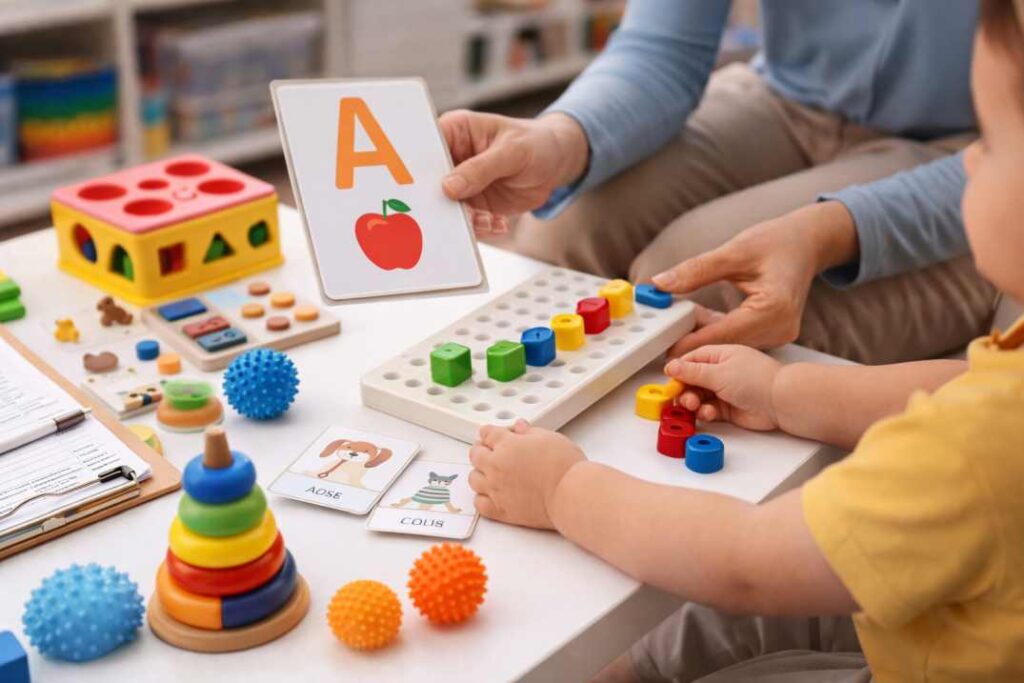
Play therapy is a form of psychotherapy specifically designed for children. It uses play — the natural language of childhood — as the primary medium for communication, expression, and healing. Rather than asking a child to sit and talk about their problems, a play therapist provides a carefully selected set of toys, art materials, and activities, and allows the child to lead. Through their play, children reveal their inner world: their fears, their conflicts, their wishes, their understanding of what has happened to them.
The play therapist is not a passive observer. They are trained to understand the symbolic meaning of children’s play, to respond in ways that deepen the therapeutic process, and to create an environment of unconditional acceptance where a child feels safe enough to express difficult emotions.
Play therapy is not the same as playing at home. It’s not the same as a playdate. It’s a structured, evidence-based therapeutic intervention delivered by a trained professional in a carefully designed environment.
Your child might benefit from play therapy if you’ve noticed:
- Persistent sadness, withdrawal, or loss of interest in activities
- Anxiety that interferes with daily life — school refusal, separation anxiety, excessive worry
- Anger, aggression, or frequent emotional outbursts
- Difficulty adjusting to a major life change: divorce, relocation, new sibling, bereavement
- Sleep disturbances — trouble falling asleep, nightmares, night terrors
- Regression in previously acquired skills — toileting, language, independence
- Social difficulties — trouble making or keeping friends, bullying, social withdrawal
- Low self-esteem or negative self-talk (“I’m stupid,” “Nobody likes me”)
- Physical complaints with no medical explanation — headaches, stomachaches
- Having experienced or witnessed a traumatic event
Play therapy is appropriate for children who have experienced specific stressors and for children with broader emotional, behavioral, or social challenges. It is particularly valuable for children who struggle to articulate their feelings verbally — whether due to age, developmental level, language delay, or simply because what they’re feeling is too big for words.
Emotional and Behavioral Challenges We Address
Play therapy supports children through a wide range of difficulties. The common thread is that the child is struggling emotionally, and traditional approaches haven’t reached them.
|
Emotional Challenges |
Life Stressors & Transitions |
Behavioral & Social Challenges |
|
Anxiety and excessive worry |
Parental separation or divorce |
Aggression and acting-out behaviors |
|
Depression and persistent sadness |
Bereavement and loss |
Difficulty with peer relationships |
|
Low self-esteem and self-worth |
Relocation — moving to a new country or city |
Bullying — as target or as aggressor |
|
Emotional dysregulation — intense mood swings |
Arrival of a new sibling |
School refusal or school-related anxiety |
|
Anger that feels uncontrollable |
Medical trauma — hospitalization, procedures |
Social withdrawal and isolation |
|
Attachment difficulties |
Exposure to family conflict |
Difficulty following rules and boundaries |
Each underlined challenge links to a detailed article that explains it in parent-friendly language.
How We Work: The Neurobloom Approach to Play Therapy
Play therapy at Neurobloom is grounded in the belief that every child has an innate capacity for healing and growth — and that the right therapeutic environment unlocks that capacity. Our approach draws from evidence-based models including Child-Centered Play Therapy, Filial Therapy, and directive play therapy techniques, tailored to each child’s needs.
Step 1: We Begin With You
Before we meet your child, we meet with you. A thorough parent interview helps us understand your child’s history, your specific concerns, what you’ve already tried, and what you hope play therapy will achieve. We ask about your child’s development, their temperament, their strengths, any significant life events, and what you observe at home. Your input is essential — you are the expert on your child.
Step 2: We Build Trust With Your Child
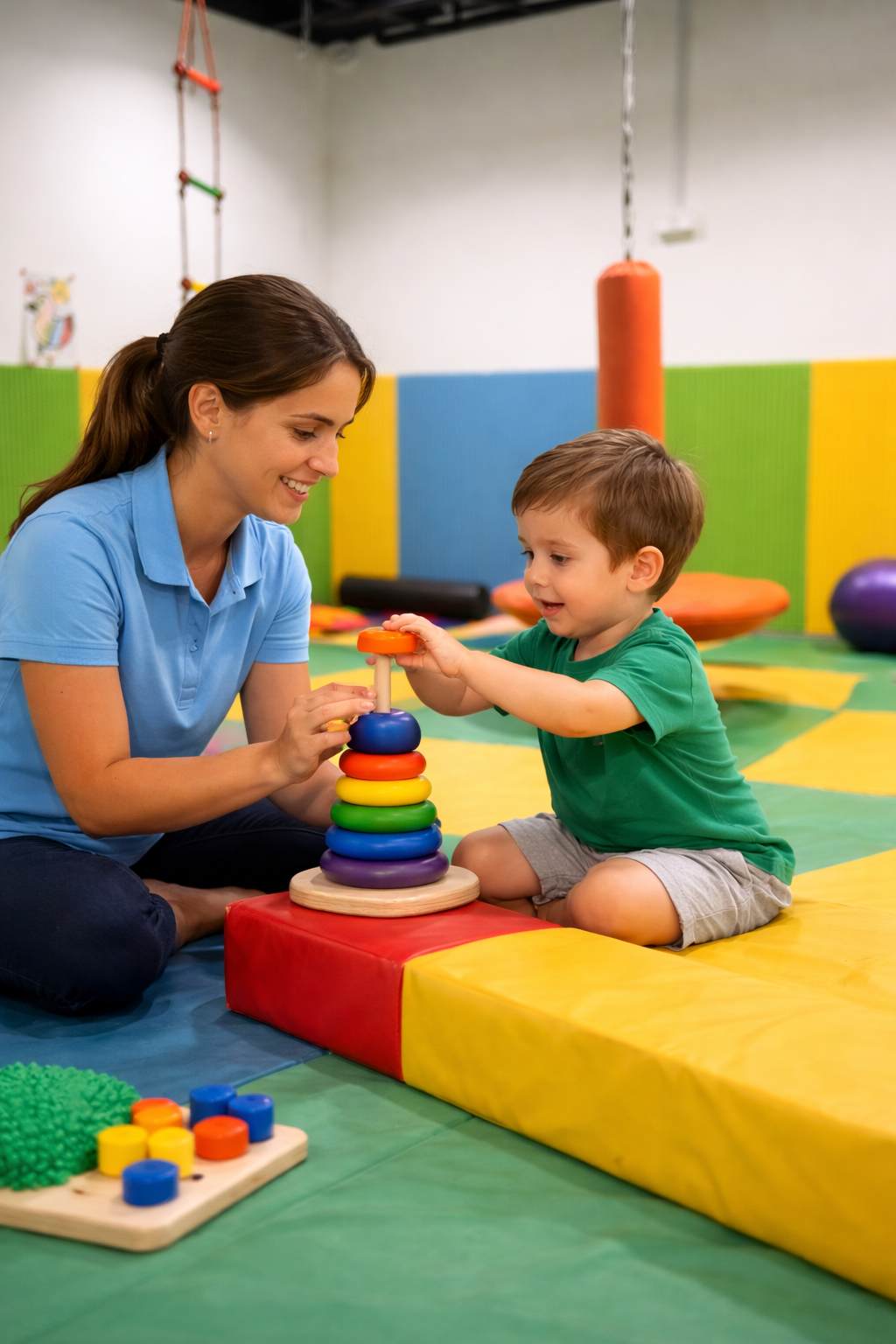
The first few sessions with your child are not about “fixing” anything. They’re about establishing safety. Your child enters a warm, inviting playroom filled with carefully selected materials: art supplies, sand tray and miniatures, dolls and dollhouse, puppets, dress-up clothes, building materials, and toys that allow for both nurturing play and aggressive expression. The therapist communicates clearly: “In here, you can play however you like. There are just a few rules to keep everyone safe.”
Your child explores. The therapist follows their lead, reflects their feelings, and demonstrates unconditional positive regard. No judgment. No pressure. No demands. Over time, as trust deepens, your child begins to use the playroom to express what’s inside — sometimes directly, often symbolically.
Step 3: We Facilitate the Therapeutic Process
As the therapeutic relationship strengthens, the play therapist actively facilitates your child’s processing. If a child repeatedly acts out scenes of rescue and danger, the therapist might gently reflect: “That little guy keeps getting saved just in time. I wonder if he feels scared a lot.” If a child builds a wall in the sand tray and places a lone figure behind it, the therapist might observe: “He’s all alone back there. I wonder what that feels like for him.”
These reflections are not interpretations forced on the child. They are invitations — offered gently and without attachment to being “right.” Your child accepts, rejects, or modifies them as needed. Over time, through this process, children develop insight into their own feelings, mastery over difficult experiences, and new ways of coping.
Step 4: We Keep You Informed and Involved
Play therapy works best when parents understand the process. We schedule regular parent review sessions — separate from your child’s sessions — where we discuss themes emerging in therapy (while protecting your child’s confidentiality), provide guidance on supporting your child at home, and answer your questions. We don’t expect you to become a play therapist. We do help you understand what your child is working through and how you can support that work.
Step 5: We Prepare for Ending
Ending therapy is a meaningful part of the process. As your child’s difficulties resolve and they develop stronger coping skills, we gradually prepare for termination. Final sessions allow your child to process the ending of the therapeutic relationship — an important skill in itself — and celebrate the growth they’ve achieved.
Is Play Therapy Right for Your Child?
We work with children from 3 to 12 years who:
- Are experiencing emotional or behavioral difficulties that affect daily life
- Have been through stressful or traumatic experiences
- Struggle to express themselves verbally — due to age, development, or communication difficulties
- Have not responded well to traditional talk therapy
- Need a safe space to process feelings they cannot articulate
- Have autism, ADHD, or developmental delays with co-occurring emotional challenges
- Are adjusting to significant life changes
Play therapy is not a replacement for other therapies your child may need. For children with autism, ADHD, speech delays, or sensory processing challenges, play therapy often works alongside speech therapy, occupational therapy, or behavioral therapy as part of a comprehensive support plan. Our play therapists coordinate with your child’s full team to ensure consistency.


What a Play Therapy Session Looks Like
Your child enters the playroom — a space intentionally designed to feel different from the rest of the clinic. It’s warm, inviting, and child-scaled. Shelves hold carefully selected materials organized by theme: nurturing toys (dolls, bottles, kitchen sets), aggressive-release toys (punching bag, foam swords, toy soldiers), creative expression materials (paints, clay, paper, markers), and mastery toys (building sets, puzzles, games).
The session structure varies by approach:
In non-directive (child-centered) sessions, your child chooses what to play with and how to play. The therapist follows their lead, tracking their play verbally, reflecting feelings, and maintaining an environment of safety and acceptance. If your child wants to smash clay figures for twenty minutes, that’s what happens — because that expression is serving a purpose.
In directive sessions, the therapist may introduce specific activities designed to address particular goals. A child working on emotional vocabulary might play a feelings-based board game. A child processing grief might create a memory box in session. A child struggling with impulse control might practice stop-and-go games that build self-regulation.
Throughout the session, the therapist maintains an attitude of warmth, acceptance, and attentive observation. They set limits only when necessary for safety — and always in a way that preserves the child’s dignity and the therapeutic relationship.
The session ends with a predictable transition routine that helps your child prepare to leave the therapeutic space and re-enter the outside world.

How to Begin: The Play Therapy Intake Process
Play therapy begins not with your child, but with you.
The intake process includes:
- Parent intake session (60-90 minutes):A comprehensive conversation about your child’s history, current concerns, family context, and goals for therapy. This session is for you — to share everything you think is relevant in a confidential, non-judgmental space.
- Child’s first session:Your child is introduced to the playroom and the therapist in a gentle, low-pressure way. The goal of early sessions is comfort and connection.
- Assessment phase (2-3 sessions):The therapist observes your child’s play themes, emotional expression, and relationship style to inform the therapeutic approach.
- Feedback and plan:After the assessment phase, we meet with you to share initial observations and discuss the recommended approach and frequency of sessions.
The Parent’s Role in Play Therapy
Your child does the work of play therapy in the playroom — but you are essential to the process.
Here’s what parent involvement looks like:
- Initial consultation:You provide the detailed history and context that shapes the therapeutic approach
- Regular parent review sessions:Every 4-6 weeks, you meet with the therapist (without your child) to discuss themes, progress, and home strategies
- Home guidance:You receive specific, practical suggestions for supporting your child’s emotional development at home
- Referral support:If your own distress is impacting your child, the therapist may gently recommend individual support for you — because your wellbeing directly affects your child’s
- Emotional support:We acknowledge that parenting a struggling child is hard. You are not judged here
We also offer Filial Therapy — a specialized approach where the therapist trains you to conduct structured play sessions with your own child at home. This can be transformative for the parent-child relationship and is offered as an option for families who are interested and appropriate for this approach.
Common Questions Parents Ask Before Starting
Will my child understand why they’re coming to play therapy?
Young children don’t need to understand “therapy.” They’re told they’re coming to a special playroom where they can play however they like with a friendly adult who wants to get to know them. Older children may receive a more direct explanation: “You’ve been having a hard time lately. This is a place where you can talk about that, or not talk about it, and just have a space that’s completely yours.”
How do I know if play therapy is working?
Progress often shows up first outside the playroom — at home or at school. Your child might be calmer, more cooperative, or more able to bounce back from disappointment. They might start talking about feelings they couldn’t name before. Behavior that was concerning might decrease in frequency or intensity. We track progress through parent reports, teacher input (with consent), and clinical observation.
Will the therapist tell me what my child says in sessions?
This is a delicate balance. Your child needs to know that the playroom is a private space where they can express anything without it being reported back. At the same time, you need to know how therapy is progressing and how to support your child. In parent review sessions, we discuss themes, progress, and guidance — but we do not share detailed accounts of your child’s play unless there is a safety concern that requires parent knowledge.
How long does play therapy take?
This varies significantly. Some children show meaningful improvement in 12-16 sessions. Children dealing with more complex difficulties — trauma, significant loss, entrenched behavioral patterns — may need longer. We review progress regularly and never extend therapy beyond what’s needed.
Can play therapy help my child with autism?
Yes, with some considerations. Play therapy can support emotional expression, social understanding, and relationship-building in children with autism. However, it’s typically most effective as part of a broader support plan that may include speech therapy, occupational therapy, or behavioral therapy. Our play therapists adapt their approach for neurodivergent children, including using more structure, incorporating special interests, and being mindful of sensory needs.
FAQ
How is play therapy different from my child just playing at home?
The difference is the trained therapist, the therapeutic environment, and the intentionality of the process. A play therapist understands the symbolic meaning of children’s play and uses specific skills — tracking, reflecting, facilitating — to deepen the therapeutic process. Play at home is wonderful and important. Play therapy is a clinical intervention.
What's the difference between play therapy and taking my child to a psychologist?
Play therapy is a form of psychotherapy delivered through the medium of play. It is provided by a psychologist or therapist trained in play therapy. When your child “goes to a psychologist,” that professional may or may not use play therapy — some use primarily talk-based approaches. Play therapy is specifically designed for children who communicate and process better through play than through conversation.
At what age is play therapy most effective?
Play therapy is developmentally appropriate for children approximately 3-12 years old. For very young children (3-5), play is their primary language, and play therapy is often the most effective therapeutic modality. For older children (9-12), play therapy may be combined with more verbal processing as the child’s capacity for reflection grows.
My child has a speech delay. Can they still benefit from play therapy?
Absolutely. In fact, play therapy is often an excellent choice for children with communication difficulties, because it doesn’t rely on verbal expression. The play itself is the communication. Many children who struggle to express themselves verbally are remarkably fluent in the language of play.
Will my child's play therapy sessions conflict with their other therapies?
No — play therapy complements other interventions. We coordinate with your child’s speech therapist, occupational therapist, or behavioral therapist to ensure all providers are working from a shared understanding of your child. Play therapy addresses emotional and relational needs that other therapies may not target directly.
How do I explain play therapy to family members who are skeptical?
Explain that play is the natural language of children — just as adults talk through their problems, children play through theirs. Play therapy is an evidence-based intervention backed by decades of research showing its effectiveness for a wide range of childhood emotional and behavioral difficulties. It’s not “just playing” — it’s therapy delivered in the medium children understand best.