
Autism Diagnosis Dubai: Clarity, Compassion, and a Clear Path Forward
You’ve been wondering, worrying, and searching for answers. A comprehensive autism assessment gives you what you need most: the truth, delivered with care, and a plan for what comes next.
The uncertainty has been the hardest part.
You’ve noticed things that didn’t sit right. Maybe your child isn’t making eye contact the way other children do. Maybe they’re not talking yet, or they had words and lost them. Maybe they play differently — lining up toys instead of pretending, fixating on one topic for months, melting down when routines change. Or maybe it’s subtler: a feeling that your child is somehow disconnected, in their own world, not reaching out to you the way you expected.
You’ve searched online. You’ve talked to family members who said “Einstein didn’t talk until he was four” or “boys develop slower.” You’ve probably cycled between reassurance and dread a hundred times. And underneath it all, there’s a question you’re almost afraid to ask aloud: Could my child have autism?
At Neurobloom Rehabilitation Center in Al Nahda, Dubai, we believe that question deserves a thorough, honest, and compassionate answer. Our autism diagnostic assessments use gold-standard tools, are conducted by experienced multidisciplinary professionals, and are designed not just to determine whether your child meets criteria for Autism Spectrum Disorder — but to understand your child completely: their strengths, their challenges, and exactly what support would help them flourish.
You deserve clarity. Your child deserves understanding. Let us provide both.
[Book an Autism Assessment Consultation] [WhatsApp Us: +971 50 754 8629]
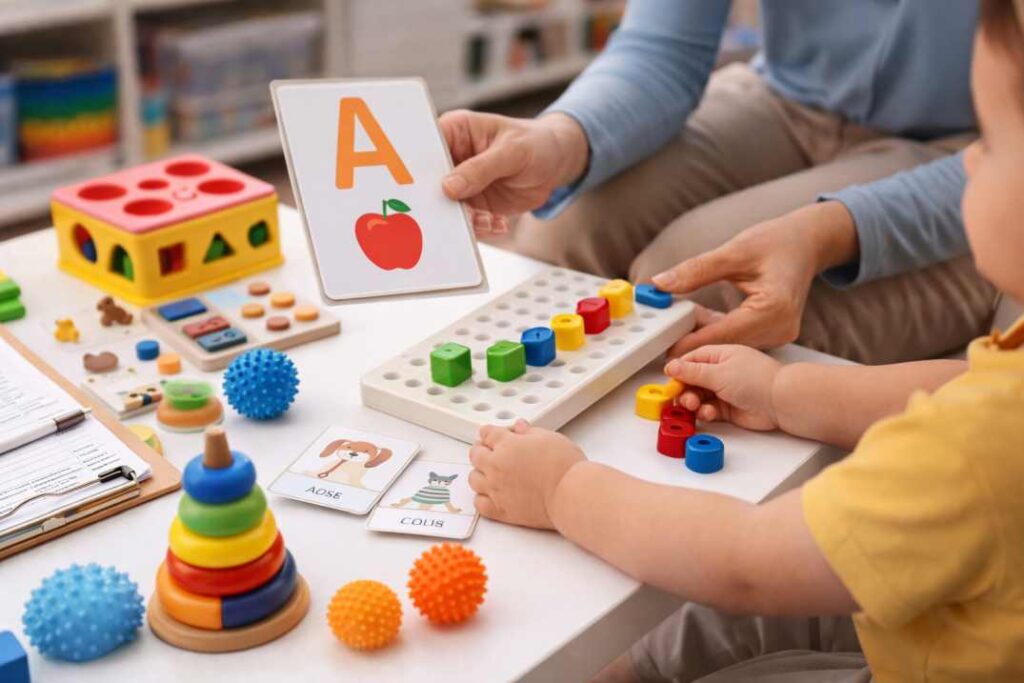


What Is an Autism Diagnostic Assessment?
An autism diagnostic assessment is a comprehensive, multidisciplinary evaluation designed to determine whether a child meets the diagnostic criteria for Autism Spectrum Disorder. It is not a single test, a quick screening, or a checklist. It is a thorough investigation conducted by trained professionals using validated assessment tools, detailed developmental history, and direct clinical observation.
A quality autism assessment answers more than “yes” or “no.” It provides a detailed profile of your child: how they communicate, how they relate to others, how they play, how they process sensory information, what they find easy, and what they find difficult. Whether or not a diagnosis is made, you should leave the process with a much deeper understanding of your child than you had when you entered.
An autism diagnosis is not a label that limits your child. It’s a key that unlocks understanding, access to appropriate support, and a roadmap for the journey ahead.
Signs That May Indicate an Autism Assessment Is Needed
Every child develops differently, and no single sign confirms or rules out autism. However, certain patterns — especially when several are present and persist over time — warrant a professional evaluation.
Social Communication and Interaction
-
Limited or no eye contact during interactions
-
Not responding to their name consistently by 12 months
-
Limited use of gestures — pointing, waving, showing objects to others
-
Difficulty with back-and-forth conversation (in verbal children)
-
Reduced sharing of interests or enjoyment with others
-
Difficulty understanding facial expressions, tone of voice, or social cues
-
Limited interest in other children or difficulty making friends
Repetitive Behaviors and Restricted Interests
-
Repetitive movements: hand flapping, rocking, spinning, finger flicking
-
Intense, narrow interests that dominate attention and conversation
-
Rigid adherence to routines; significant distress at small changes
-
Repetitive play: lining up toys, spinning wheels, opening and closing doors
-
Unusual sensory responses: extreme sensitivity to sounds, textures, lights, or smells
-
Unusual sensory seeking: staring at lights, sniffing objects, seeking intense movement
Communication Differences
-
Delayed speech development or no spoken words
-
Loss of previously acquired words or social skills (regression)
-
Unusual speech patterns: echolalia (repeating phrases), odd intonation
-
Literal understanding of language; difficulty with jokes or sarcasm
-
Difficulty initiating or sustaining conversation appropriate to age
If several of these signs feel familiar and are affecting your child’s daily life, an assessment can provide the clarity you need.
Our Approach to Autism Diagnosis
At Neurobloom, an autism diagnostic assessment is not a cold clinical process. It’s the beginning of a relationship — one built on respect for your child, trust in your knowledge as a parent, and a commitment to getting the full picture right.
We Use Gold-Standard Diagnostic Tools
Our assessments are built around the ADOS-2 (Autism Diagnostic Observation Schedule, Second Edition) — the internationally recognized gold standard for autism assessment. The ADOS-2 is a semi-structured, play-based assessment that allows a trained clinician to observe social communication, play, and repetitive behaviors in a standardized way. Different modules are used depending on your child’s age and language level, ensuring the assessment is developmentally appropriate.
We complement the ADOS-2 with the ADI-R (Autism Diagnostic Interview-Revised) — a comprehensive parent interview that captures your child’s developmental history and current functioning across social interaction, communication, and behavior.
We Take a Truly Multidisciplinary Approach
Autism affects multiple domains of development, and a single professional cannot capture the full picture. Our autism assessments involve:
-
Clinical Psychologist: Leads the diagnostic process, administers ADOS-2 and ADI-R, integrates findings
-
Speech and Language Therapist: Evaluates communication, language, and social interaction skills
-
Occupational Therapist: Assesses sensory processing patterns, motor skills, and daily living skills
These professionals observe your child, share findings, and contribute to a single, integrated report. You don’t receive three separate opinions. You receive one unified understanding of your child.
We See Your Child, Not Just the Criteria
Diagnostic criteria are essential — they ensure accuracy and consistency. But your child is more than a checklist. Our assessments document not just what your child struggles with, but what they’re good at, what they enjoy, what motivates them, and what kind of support they respond to. These strengths are the foundation on which effective intervention is built.
We Assess Co-Occurring Conditions
Many children with autism also experience other challenges: ADHD, anxiety, sensory processing difficulties, language disorders, intellectual disability, or specific learning difficulties. Our assessment screens for these co-occurring conditions so that the full picture is understood and nothing is missed.
We Deliver Findings With Care
Receiving an autism diagnosis can be an emotional experience — even when you expected it. We deliver findings in a dedicated parent feedback session, not a rushed phone call. We walk through the report together, answer every question, and discuss what the diagnosis means for your child, your family, and your next steps. We leave ample time for your emotions, your questions, and your concerns.
What If the Assessment Shows My Child Does Not Have Autism?
This is not a “failed” assessment. It is an assessment that provided clarity — and clarity is always valuable.
If your child does not meet criteria for Autism Spectrum Disorder, our report will explain why, document what was observed, and — crucially — describe what was identified instead. Your child may have a language disorder, ADHD, sensory processing differences, anxiety, or another explanation for the behaviors that concerned you. Or your child may be developing within the broad range of typical, with some areas that would benefit from monitoring or mild support.
Whatever the outcome, you will leave with a clear understanding of your child and recommendations for what, if anything, would help them thrive.
When Should You Seek an Autism Assessment?
Parents often ask: “Is it too early? Should I wait and see?”
Research consistently shows that early intervention produces the best outcomes for children with autism. The brain is most adaptable in the early years, and children who receive appropriate support before age 5 tend to make the most significant gains in communication, social skills, and daily functioning.
Consider an assessment if your child:
-
Has limited or no spoken words by 18 months
-
Had words and lost them (regression at any age)
-
Does not respond to their name consistently
-
Shows little interest in other children
-
Engages in repetitive behaviors that interfere with daily life
-
Has intense, narrow interests that dominate their time
-
Struggles significantly with changes in routine
-
Has unusual sensory responses that affect daily functioning
Trust your instincts. Parents are usually the first to notice that something isn’t quite right. If you’ve been concerned for more than a few months, an assessment can provide clarity — and if intervention is needed, earlier is better.


The Autism Assessment Journey: Step by Step
Step 1: Initial Parent Consultation
Your journey begins with a confidential conversation with our clinical psychologist. This session (typically 60-90 minutes) is for you. We listen to your concerns, gather your child’s developmental and medical history, and explain the assessment process in detail. We answer your questions openly. By the end of this session, you’ll know exactly what to expect, how long the process will take, and what the assessment will cost.
Step 2: Assessment Sessions With Your Child
Your child attends 2-3 assessment sessions, typically scheduled on separate days so your child is not fatigued. Sessions are play-based and designed to feel comfortable, not clinical. Your child interacts with the psychologist, speech therapist, and occupational therapist in a warm, sensory-friendly environment. Parents are usually present or nearby, depending on your child’s needs and the requirements of specific assessments.
Step 3: Standardized Parent Interview (ADI-R)
While your child’s sessions are happening, we conduct the ADI-R — a detailed, structured interview about your child’s development and behavior across social interaction, communication, and restricted/repetitive behaviors. This interview takes approximately 1.5-2 hours and is an essential component of a comprehensive diagnostic assessment.
Step 4: School Input (With Your Consent)
With your written permission, we gather information from your child’s teacher or nursery staff using standardized questionnaires. Understanding how your child functions in a structured group setting with peers is critical — autism can present differently at school than at home.
Step 5: Multidisciplinary Integration and Report Writing
Our assessment team meets to integrate findings from all sources: ADOS-2, ADI-R, speech and language evaluation, occupational therapy assessment, and school input. We determine whether your child meets DSM-5 criteria for Autism Spectrum Disorder, and if so, at what level of support (Level 1, 2, or 3). We also document any co-occurring conditions identified during the assessment.
Our comprehensive written report includes:
-
Your child’s full developmental and diagnostic profile
-
Specific diagnostic conclusions with clear explanation
-
Detailed description of your child’s strengths and capabilities
-
Co-occurring conditions or concerns, if any
-
Specific, actionable recommendations for therapy, education, and home support
-
Guidance on explaining the diagnosis to your child and family members
Reports are ready within 14 working days of the final assessment session.
Step 6: Parent Feedback Session
This is the most important session. We sit with you — without your child present — and walk through every page of the report. We explain the findings in plain language. We answer every question. We hold space for whatever you’re feeling. And we discuss what comes next: therapy options, school recommendations, home strategies, and how to talk to your child and family about the diagnosis.
There is no pressure to begin therapy at Neurobloom. The report and recommendations are yours. We provide a clear path forward — you decide what steps to take.

What Makes Our Autism Assessment Different?
Multidisciplinary from the start. Not a single psychologist’s opinion — a team evaluation with integrated findings.
Gold-standard tools. ADOS-2 and ADI-R, the international benchmarks for autism diagnosis.
Strength-focused. Your child’s capabilities are documented as thoroughly as their challenges.
Parent-centered. You are treated as a collaborative partner, not a passive recipient of a diagnosis.
Actionable. Your report includes specific, practical recommendations — not vague suggestions.
School-ready. Our diagnostic reports meet Dubai school and health authority documentation requirements.
Culturally sensitive. We understand the diverse cultural context of Dubai and the varying ways autism is understood across communities.
FAQ
At what age can autism be reliably diagnosed?
Autism can be reliably diagnosed as early as 18-24 months by experienced professionals using appropriate tools. In practice, many children are diagnosed between ages 2 and 4, when differences in social communication and behavior become more apparent. Earlier assessment is possible when signs are clear, and early intervention can begin even before a formal diagnosis is confirmed.
How long does the entire diagnostic process take?
From initial consultation to receiving your report, the process typically spans 3-4 weeks. This allows time for multiple assessment sessions, school input, multidisciplinary integration, and thorough report writing. We don’t rush autism assessments — accuracy and depth matter more than speed.
Will the report be accepted by my child's school?
Yes. Our diagnostic reports meet the documentation standards required by Dubai schools under KHDA regulations, including requirements for learning support services, shadow teacher provision, and curriculum accommodations. We are familiar with the requirements of British, American, IB, and Indian curriculum schools.
Will the report be accepted by insurance providers?
Yes. Our diagnostic reports are accepted by major UAE insurance providers for authorization of autism-related therapies. Our administrative team can help you understand your specific insurance coverage.
Do both parents need to attend?
Ideally, yes — particularly for the parent interview component. Both parents provide valuable developmental history and observations. However, we understand family circumstances vary, and we work with whatever arrangement is possible. Single parents or parents attending alone are fully supported.
My child is non-speaking. Can you still assess them?
Absolutely. The ADOS-2 has specific modules designed for non-speaking and minimally verbal children. Our speech and language therapist is skilled in assessing communication in children who do not use spoken language. Being non-speaking does not prevent an accurate autism assessment.
My child has already been diagnosed elsewhere. Can I get a second opinion?
Yes. Bring your previous reports. We will review them and conduct additional assessment as needed. Some families seek second opinions when they disagree with a previous diagnosis, when they feel the previous assessment was too brief, or when a previous assessment did not provide adequate recommendations.
What happens after diagnosis? What support do you offer?
After diagnosis, we discuss therapy options based on your child’s specific profile. Many families begin with a combination of speech therapy, occupational therapy, and behavioral therapy. We offer all these services at Neurobloom, and because our assessment and therapy teams work together, your child’s therapy plan is directly informed by their assessment findings. There is no obligation to begin therapy with us.
Will my child be "labeled" for life?
An autism diagnosis describes your child’s current presentation and support needs. Many children make significant progress with appropriate intervention, and some no longer meet full diagnostic criteria as they grow older. The diagnosis provides understanding and access to support now — it does not define your child’s future.