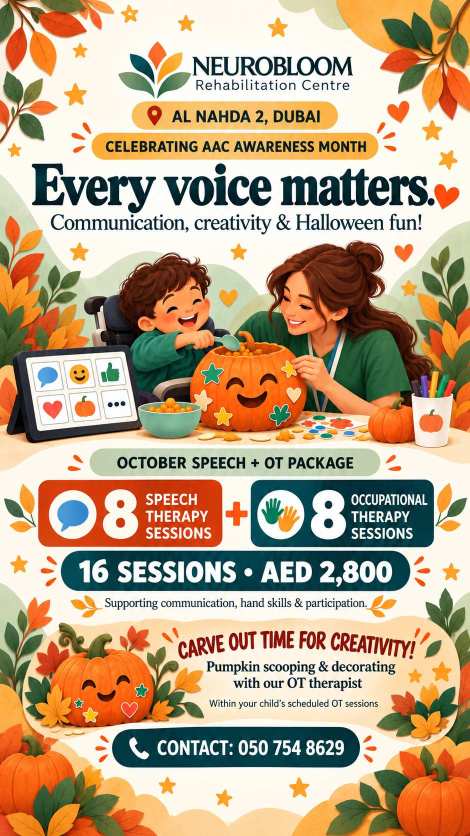
When a child’s nervous system struggles to accurately process everyday sensory inputs, the world can feel like an unpredictable, overwhelming, and chaotic space. For families living in the high-density residential blocks bordering the Dubai-Sharjah gateway, this neurological mismatch often turns peaceful family routines into intense, daily battles. A simple weekend walk, the sudden hum of a household appliance, or even the texture of a specific school uniform can trigger severe emotional meltdowns, defensive avoidance, or total cognitive withdrawal. Accessing easy reach sensory integration near Al Nahda Pond Park Al Nahda Dubai provides parents with a vital, neighborhood-based clinical resource to help their children decode environmental stimuli and regain physical and emotional balance.
At Neurobloom Rehabilitation Center, we understand that sensory processing challenges are never just about “bad behavior” or picky preferences. We recognize the silent, exhausting weight carried by parents who find themselves constantly scanning environments for potential triggers, worrying about unexpected meltdowns during public outings, or feeling isolated by a lack of specialized local guidance. Our multidisciplinary clinical team replaces guesswork with precise, data-driven pediatric care, looking past surface-level non-compliance to identify and treat the underlying neurological vulnerabilities that disrupt your child’s daily development.
The Neurobiology of Sensory Processing
From an advanced clinical perspective, sensory integration is the foundation upon which all higher-level cognitive, behavioral, and academic skills are built. The human brain must seamlessly receive, organize, and interpret inputs from the tactile, auditory, visual, vestibular (balance), and proprioceptive (body awareness) systems to formulate an appropriate adaptive response. When these neurological pathways operate inefficiently, a child may become hyper-reactive to minor stimuli—perceiving ordinary sounds as physically painful—or hypo-reactive, constantly seeking out intense physical impacts, crashing into walls, or moving restlessly just to feel grounded in space.
Our therapeutic approach focuses directly on strengthening this sensory foundation rather than merely treating the outward behavioral symptoms. By introducing highly structured, individually tailored sensory protocols within a controlled, supportive environment, our licensed therapists help children slowly rewire their adaptive habits. We guide their nervous systems to habituate to neutral inputs and appropriately grade their motor responses. This systematic neurological scaffolding moves your child away from a state of protective, fight-or-flight anxiety and toward genuine environmental mastery, emotional self-regulation, and classroom readiness.
Why Families Choose Neurobloom
Families across the twin-city border select Neurobloom Rehabilitation Center because we reject standardized, assembly-line therapy templates in favor of deeply personalized, evidence-based care.
- Integrated Multi-Specialty Core: We align the clinical expertise of Board Certified Behavior Analysts (BCBAs), registered behavior technicians, licensed occupational therapists, and speech-language pathologists under a single, unified care plan.
- A Low-Arousal Therapeutic Sanctuary: Our boutique center is deliberately custom-engineered to serve as a calm retreat from urban overstimulation, utilizing soft natural lighting, muted color tones, and predictable layouts to settle sensitive nervous systems.
- Empowering Parent-Partner Coaching: We believe that sustainable clinical progress must extend directly into your home. We provide hands-on, practical caregiver training so you can confidently implement sensory management and de-escalation strategies during daily family routines.
- Objective, Data-Driven Mapping: We eliminate clinical ambiguity entirely. Every sensory milestone, behavioral breakthrough, and physical victory is carefully recorded and tracked through clear metrics, giving your family visible proof of your child’s weekly growth.
Understanding the Challenge: Signs of Sensory Processing Dysfunction
Sensory processing difficulties can present in a wide variety of ways, frequently shifting in intensity based on the child’s fatigue, the time of day, or the ambient noise in the room. Recognizing these subtle signs as structural neurodevelopmental gaps rather than intentional defiance is the critical first step toward securing effective easy reach sensory integration near Al Nahda Pond Park Al Nahda Dubai. Within your everyday domestic routines or school interactions, you may observe that your child:
- Reacts with extreme distress to everyday sounds, such as a vacuum cleaner, a hair dryer, or the bell at school, often covering their ears or attempting to flee the room.
- Exhibits severe tactile defensiveness, melting down over the tags on clothing, the seams of socks, or the feeling of sticky textures like glue, paint, or certain food consistencies on their hands.
- Displays poor proprioceptive awareness, frequently dropping items, tripping over flat surfaces, walking with an uncoordinated gait, or using excessive force when writing or holding toys.
- Constantly seeks out intense sensory input, spinning in circles, rocking their body, jumping repeatedly, or deliberately crashing into furniture and people to feel anchored.
- Becomes highly overwhelmed in crowded, bright, or chaotic spaces, leading to sudden emotional meltdowns or severe behavioral shutdowns during grocery trips or mall visits.
- Struggles significantly with motor planning and transitions, appearing unusually clumsy, finding playground equipment intimidating, or requiring prolonged prompting to shift between daily activities.
[ Al Nahda Dubai / Al Nahda Sharjah Residential Sectors ] │ ▼ (Quick Local Commute) [ Neurobloom Rehabilitation Center ] ▲ (Direct Access via E11 / Amman St) │ [ Al Nahda Pond Park / Sahara Centre / Stadium Metro Station ]
Hyper-Local Convenience near Al Nahda Pond Park
Perfectly situated to support families residing within the premium high-rises and established residential communities flanking the Dubai-Sharjah border, Neurobloom provides an exceptional standard of hyper-local accessibility. We know that managing multiple weekly therapy appointments alongside school, homework, and work commitments can quickly lead to logistical exhaustion for the entire household. Our boutique clinic is purposefully located near the gateway of the twin cities to completely eliminate long, draining cross-city travel across the wider metropolitan area.
Located within easy reach of the tranquil Al Nahda Pond Park landmark, our facility integrates effortlessly into your existing neighborhood routine. Whether your family regularly manages weekly errands at the nearby Sahara Centre, drop-offs at prominent local institutions like Pristine Private School or The Central School, or visits specialized medical hubs like NMC Specialty Hospital, our location offers seamless connectivity. We feature streamlined transit access via major neighborhood corridors including Al Taawun Street, Al Wahda Street (E11), Baghdad Street, Amman Street, and Beirut Street, ensuring a highly predictable commute even during peak morning hours. For commuting parents utilizing public transit networks, we offer direct connections to both the Stadium Metro Station and the Al Qusais Metro Station. With ample, completely hassle-free RTA parking available directly outside our entrance, dropping off or picking up your child for their clinical sessions remains entirely smooth, predictable, and stress-free.
The Importance of Early Support
The toddler and primary school years represent a critical developmental window driven by peak levels of neuroplasticity—the human brain’s natural capacity to reorganize its neural connections and build alternative learning pathways in response to targeted, repetitive environmental experiences. Choosing to adopt a “wait and see” approach when a child shows clear signs of sensory defensiveness, motor awkwardness, or emotional dysregulation frequently allows these functional gaps to widen. By the time a child enters a structured primary classroom without these foundational sensory tools, they are forced to expend their limited cognitive energy simply trying to survive the sensory and behavioral demands of the room, leaving very little mental bandwidth for actual academic learning or social connection.
By entering a structured sensory integration program early, you take full advantage of this peak neurological window. Addressing minor sensory processing vulnerabilities and motor planning difficulties before formal academic expectations scale up ensures your child builds the vital emotional resilience, self-regulation tools, and independent coping mechanisms they need to step into the classroom with true confidence. This proactive approach establishes a firm foundation for long-term academic success, meaningful peer relationships, and sustainable personal independence.
Frequently Asked Questions
What happens during an initial sensory integration evaluation? Our initial evaluation is a welcoming, entirely play-based baseline session conducted in our specialized low-arousal environment. Our expert clinical therapists observe how your child moves through space, interacts with various textures, responds to different auditory and visual inputs, and handles minor environmental transitions. We combine these direct clinical observations with your specific family insights to map an objective sensory profile and build a highly customized care plan.
How does sensory integration therapy differ from standard play? While our sensory sessions look like fun, active play to a child, every single activity is a precisely calculated clinical intervention known as a “just-right challenge.” Our therapists intentionally manipulate parameters like vestibulocochlear input, proprioceptive resistance, and tactile exposure using specialized swings, weighted items, and climbing structures. This systematically challenges the child’s nervous system to organize sensory information efficiently, building real adaptive habits that standard, unstructured play cannot replicate.
Can sensory processing challenges cause behavioral meltdowns? Yes, frequently. Many behaviors that appear to be intentional defiance, non-compliance, or tantrums are actually involuntary fight-or-flight neurological responses to sensory overload. When a child’s brain is completely overwhelmed by loud noises, bright overhead lights, or uncomfortable textures, they lose the capacity to self-regulate. Our therapy helps calm this overactive nervous system, giving the child the physiological stability they need to handle environmental stressors without melting down.
How long does it take to see visible progress in a child’s sensory regulation? Because every child’s nervous system and baseline sensory thresholds are unique, there is no single timeline for progress. Some families notice positive shifts in emotional regulation, transitions, and sleep patterns within a few weeks of consistent therapy, while more complex motor planning or severe tactile challenges may require several months of steady scaffolding. We collect detailed data during every single session, providing you with transparent, visual progress metrics at regular intervals.
If you are fully prepared to move past the daily strain of developmental hurdles and unlock a clear, expert-guided path forward for your child’s physical, behavioral, and emotional independence, our dedicated clinical team is here to walk beside you at every turn. Every unique mind contains remarkable hidden strengths when provided with a compassionate, low-arousal environment and a robust clinical foundation. To learn more about our specific assessment protocols or to arrange your child’s initial functional baseline consultation for easy reach sensory integration near Al Nahda Pond Park Al Nahda Dubai, please visit our main website at http://neurobloomrehab.com/ or reach out to our clinical intake office directly at +971 50-754-8629. We look forward to welcoming your family into our warm, dedicated care community.