
Child Assessment Hub Dubai: Understanding Your Child Clearly, Completely, and Compassionately
Before any therapy begins, there must be understanding. Our comprehensive child assessments give you the clarity you’ve been searching for.
You’ve been worried for a while now. Maybe your child isn’t talking as much as other children their age. Maybe their teacher has raised concerns about attention, behavior, or learning. Maybe you’ve noticed things at home — meltdowns that seem more intense than typical tantrums, a struggle to make friends, an aversion to certain sounds or textures that’s starting to limit your family’s life. Or maybe you can’t quite put your finger on what’s wrong — you just have a persistent, gut-level feeling that something isn’t right.
Living in uncertainty is exhausting. You research online and find conflicting information. Friends and family offer opinions that range from “all kids develop differently” to “you need to get that checked immediately.” You wonder if you’re overreacting. You also wonder if you’re not acting fast enough.
At Neurobloom Rehabilitation Center in Al Nahda, Dubai, our Child Assessment Hub exists to replace uncertainty with clarity. We don’t do rushed checklists. We do thorough, multidisciplinary evaluations that give you a complete picture of your child — their strengths, their challenges, and exactly what kind of support would help them thrive.
You deserve answers. Your child deserves understanding. Let us provide both.
[Book an Assessment] [WhatsApp Us: +971 50 754 8629]


What Is a Child Assessment — and Why Does It Matter?
A child assessment is a comprehensive evaluation conducted by qualified professionals to understand your child’s development across multiple domains: communication, motor skills, sensory processing, cognition, behavior, social-emotional functioning, and daily living skills. It’s not a single test. It’s a thorough process that combines standardized assessments, clinical observations, parent interviews, and — where appropriate — input from teachers and other professionals.
The goal of an assessment is not to label your child. It’s to understand them. A good assessment answers the questions that keep you up at night: Why does my child struggle with this? Is this a phase or a genuine concern? What kind of support would actually help? What are my child’s strengths that we can build on?
A quality assessment is the foundation of effective intervention. Without it, therapy is guesswork. With it, every session has direction and purpose.
Our Assessment Philosophy
At Neurobloom, assessment is not a transactional process. It’s the beginning of a relationship. We approach every assessment with these principles:
We assess the whole child, not just the concern. A speech delay doesn’t exist in isolation. It may be connected to sensory processing, social communication, or motor planning. We look across domains to understand the full picture.
We spend time. Meaningful time. Our assessments typically span multiple sessions — not because we’re inefficient, but because a child’s true abilities and challenges emerge over time, in different contexts, with different people. A single-hour snapshot is not enough.
We involve you deeply. You know your child better than anyone. Your observations, your concerns, your knowledge of your child’s history and daily life are essential data. We listen carefully and treat you as a collaborative partner throughout the process.
We write reports you can actually understand. Our assessment reports are detailed and clinically rigorous — but they’re written in plain language. You shouldn’t need a medical dictionary to understand your own child’s evaluation.
We focus on strengths, not just deficits. Your child is more than their challenges. Every assessment report includes a clear description of your child’s strengths, interests, and capabilities — because these are the foundation on which progress is built.
Types of Assessments We Offer
Every child who comes to Neurobloom receives an assessment tailored to their specific concerns. We offer several assessment pathways, which can be combined when concerns span multiple domains.
Speech and Language Assessment
For children with concerns about talking, understanding language, pronunciation, stuttering, or social communication.
What it evaluates:
- Expressive language — what your child can say
- Receptive language — what your child understands
- Speech sound production and clarity
- Fluency (stuttering)
- Pragmatic/social communication skills
- Oral motor function for speech
Who typically seeks this: Parents concerned about late talking, unclear speech, difficulty following instructions, stuttering, or social communication challenges.
Autism Diagnostic Assessment
For children showing signs of autism spectrum disorder, including challenges with social communication, restricted interests, repetitive behaviors, or sensory differences.
What it evaluates:
- Social communication and interaction
- Play skills and imaginative play
- Restricted and repetitive behaviors
- Sensory processing patterns
- Developmental history
Gold-standard tools used: ADOS-2 (Autism Diagnostic Observation Schedule), ADI-R (Autism Diagnostic Interview-Revised), supplemented by multidisciplinary input from speech therapy and occupational therapy as needed.
Who typically seeks this: Parents noticing limited eye contact, difficulty with peer interaction, rigid routines, intense interests, speech delays, sensory sensitivities, or other possible autism indicators.
ADHD Assessment
For children with concerns about attention, hyperactivity, impulsivity, or executive function challenges that affect learning and daily life.
What it evaluates:
- Sustained attention and distractibility
- Impulse control
- Hyperactivity levels
- Executive function (organization, planning, time management)
- Impact across settings (home, school, social)
Assessment components: Standardized ADHD rating scales (parent and teacher), clinical interview, direct observation, and screening for commonly co-occurring conditions.
Who typically seeks this: Parents noticing difficulty focusing, constant fidgeting or movement, acting without thinking, disorganization, or school underperformance despite evident capability.
Comprehensive Developmental Assessment
For children with broader concerns about development — when multiple areas seem affected, or when it’s unclear what’s driving the challenges.
What it evaluates:
- Cognitive and intellectual functioning
- Speech, language, and communication
- Fine and gross motor skills
- Sensory processing
- Social-emotional development
- Adaptive functioning (daily living skills)
- Academic readiness or achievement
Who typically seeks this: Parents with global concerns about their child’s development, children who seem behind peers across multiple domains, or when a specific diagnosis hasn’t been identified but concerns are significant.
Occupational Therapy Assessment
For children with concerns about motor skills, sensory processing, handwriting, self-care, or daily functioning.
What it evaluates:
- Fine motor skills (grasp, manipulation, handwriting)
- Gross motor skills (balance, coordination, motor planning)
- Sensory processing patterns
- Visual-motor integration
- Self-care skills (dressing, feeding, hygiene)
- Executive function as it relates to daily tasks
Who typically seeks this: Parents noticing clumsiness, poor handwriting, difficulty with buttons or zippers, sensory sensitivities, or trouble with age-appropriate self-care tasks.
Feeding Assessment
For children with extremely limited diets, food refusal, difficulty with textures, or mealtime distress.
What it evaluates:
- Oral motor function for eating
- Sensory responses to food textures, temperatures, and tastes
- Mealtime behaviors and dynamics
- Nutritional adequacy of current diet
- Medical history relevant to feeding
Who typically seeks this: Parents of children who eat fewer than 15-20 foods, gag or vomit at certain textures, refuse entire food groups, or have mealtime battles that dominate family life.
When Should You Seek an Assessment?
Parents often ask us: “Am I overreacting? Should I wait and see?”
Here are some general guidelines. Trust your instincts — parents usually notice when something isn’t right well before anyone else does.
Consider a speech and language assessment if:
- Your child isn’t babbling by 9 months
- No words by 15-18 months
- Fewer than 50 words at 2 years
- Not combining two words by 2.5 years
- Speech is difficult for unfamiliar people to understand at 3 years
- Stuttering persists beyond 6 months or causes distress
Consider an autism assessment if:
- Limited or no eye contact
- Not responding to name consistently by 12 months
- No pointing or showing objects to others by 18 months
- Loss of previously acquired language or social skills
- Intense, narrow interests that dominate play
- Significant difficulty with changes in routine
- Limited interest in other children
Consider an ADHD assessment if:
- Consistent difficulty focusing not explained by age
- Constant movement or fidgeting that interferes with functioning
- Impulsive behavior that creates safety concerns or social problems
- Teacher concerns about attention, behavior, or work completion
- Significant discrepancy between apparent ability and school performance
Consider a developmental assessment if:
- Your child seems behind peers across multiple areas
- Milestones are consistently late
- You have a general sense that development isn’t progressing as expected
Trust your gut. If you’ve been worried for more than a few months, an assessment can provide clarity — either reassurance that your child is on track, or identification of needs and a plan to address them. Either outcome is valuable.


The Assessment Journey: What to Expect
Every assessment at Neurobloom follows a structured, transparent process designed to minimize stress and maximize clarity.
Step 1: Initial Consultation
Your journey begins with a parent-only consultation (in person or by phone). We listen to your concerns, ask about your child’s developmental history, and help you determine which assessment pathway is most appropriate. We explain the process, timeline, and fees clearly — so there are no surprises.
Step 2: Assessment Sessions
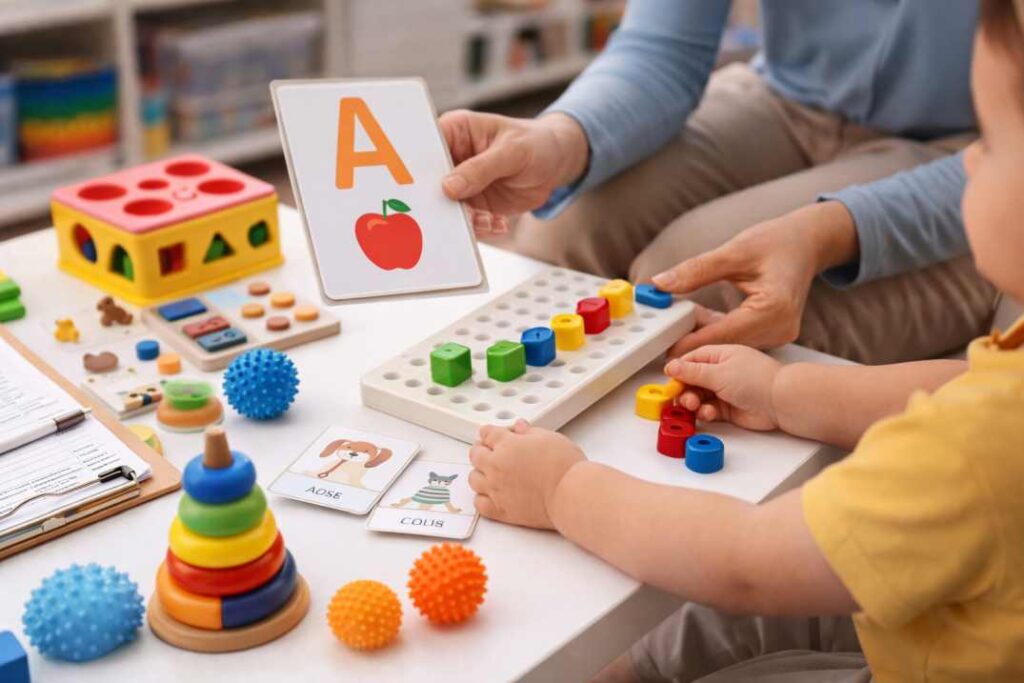
Depending on the type of assessment, your child attends 1-3 sessions with the relevant professionals. Sessions are designed to feel comfortable and engaging for your child. We use play-based activities, standardized tests, and clinical observations — not intimidating exam-room formats. Young children often don’t realize they’re being assessed; they just think they’re playing with a friendly adult.
For diagnostic assessments (autism, ADHD), parent interviews are a core component. Your observations and insights are essential clinical data.
Step 3: Information Gathering
With your consent, we may send questionnaires to your child’s teacher or other professionals involved in their care. Understanding how your child functions across settings — not just in our clinic — is essential for an accurate picture.
Step 4: Analysis and Report Writing
Our team analyzes all assessment data, integrating findings from multiple sources into a cohesive understanding of your child. We write a comprehensive report in clear, accessible language. The report includes:
- Your child’s developmental and clinical profile
- Strengths and capabilities
- Areas of challenge and concern
- Diagnostic impressions (if applicable and if criteria are met)
- Specific, actionable recommendations for therapy, school support, and home strategies
Reports are typically ready within 10-14 working days of the final assessment session.
Step 5: Parent Feedback Session
This is not a rushed phone call. It’s a dedicated, in-person meeting where we walk through every finding, answer every question, and discuss next steps. You leave with a clear understanding of your child’s needs and a concrete plan for moving forward. There is no pressure to commit to therapy at Neurobloom. The report and recommendations are yours — you decide what happens next.

Assessment Reports: What Makes Ours Different
An assessment report should be a tool you can use — not a document that sits in a drawer. Our reports are:
- Understandable:Written in clear language with jargon explained. You should be able to read and understand your child’s report without a translator.
- Actionable:Every report includes specific, concrete recommendations. Not “consider therapy” — but what kind, how often, what goals to prioritize.
- Strength-focused:Your child’s capabilities are documented alongside their challenges. Progress builds on strengths.
- School-ready:Our diagnostic reports meet the documentation requirements for school accommodations, learning support applications, and examination access arrangements across Dubai’s major curriculum systems.
- Multidisciplinary:When multiple professionals contribute to an assessment, their findings are integrated into a single, coherent report — not separate documents from separate clinicians.
FAQ
How do I know which type of assessment my child needs?
You don’t need to figure this out alone. During the initial consultation, we listen to your concerns and recommend the most appropriate assessment pathway. Often, parents come in concerned about one thing, and through discussion, we identify that a broader assessment would be more appropriate — or sometimes more focused assessment is all that’s needed. We guide you through this decision.
What if the assessment shows nothing is wrong?
This is not a “wasted” outcome — it’s deeply valuable. Many parents carry anxiety for months or years, unsure whether their child’s development is on track. A comprehensive assessment that provides reassurance is worth its weight in peace of mind. And if the assessment identifies subtle areas that could benefit from support — even without a formal diagnosis — you’ll have a clear roadmap.
Will my child be labeled?
A diagnosis is not a label. It’s an explanation. It helps you understand your child, access appropriate support, and advocate effectively. That said, we are thoughtful about when a formal diagnosis is warranted and when it’s not. We don’t diagnose for the sake of diagnosing. If a child shows traits but doesn’t meet full criteria, we say so clearly — and still provide recommendations for support.
How long does the entire assessment process take?
From initial consultation to receiving your report, the process typically spans 3-4 weeks. This allows time for multiple assessment sessions, information gathering from teachers if applicable, thorough analysis, and report writing. We don’t rush assessments — accuracy and depth matter more than speed.
What age children do you assess?
We assess children from approximately 12 months through 12 years. Assessment methods are adapted to be developmentally appropriate at every age.
If my child is diagnosed, do I have to commit to therapy at Neurobloom?
No. The assessment and its recommendations are yours. You are under no obligation to pursue therapy at Neurobloom. Many families do choose to continue with us because the assessment team and therapy team work together seamlessly, but the decision is entirely yours.
My child has already been assessed elsewhere. Can you do a second opinion?
Yes. We offer independent second-opinion assessments. Bring your previous reports — we’ll review them and conduct additional assessment as needed to address outstanding questions or concerns.